Gallbladder problems can cause severe pain and digestive issues, often requiring surgery. But advanced technology now allows doctors to perform gallbladder removal using a robot. This technique, called robotic cholecystectomy, is a modern and minimally invasive way to remove the gallbladder with more precision and faster recovery compared to traditional surgery.
What Is Robotic Cholecystectomy?
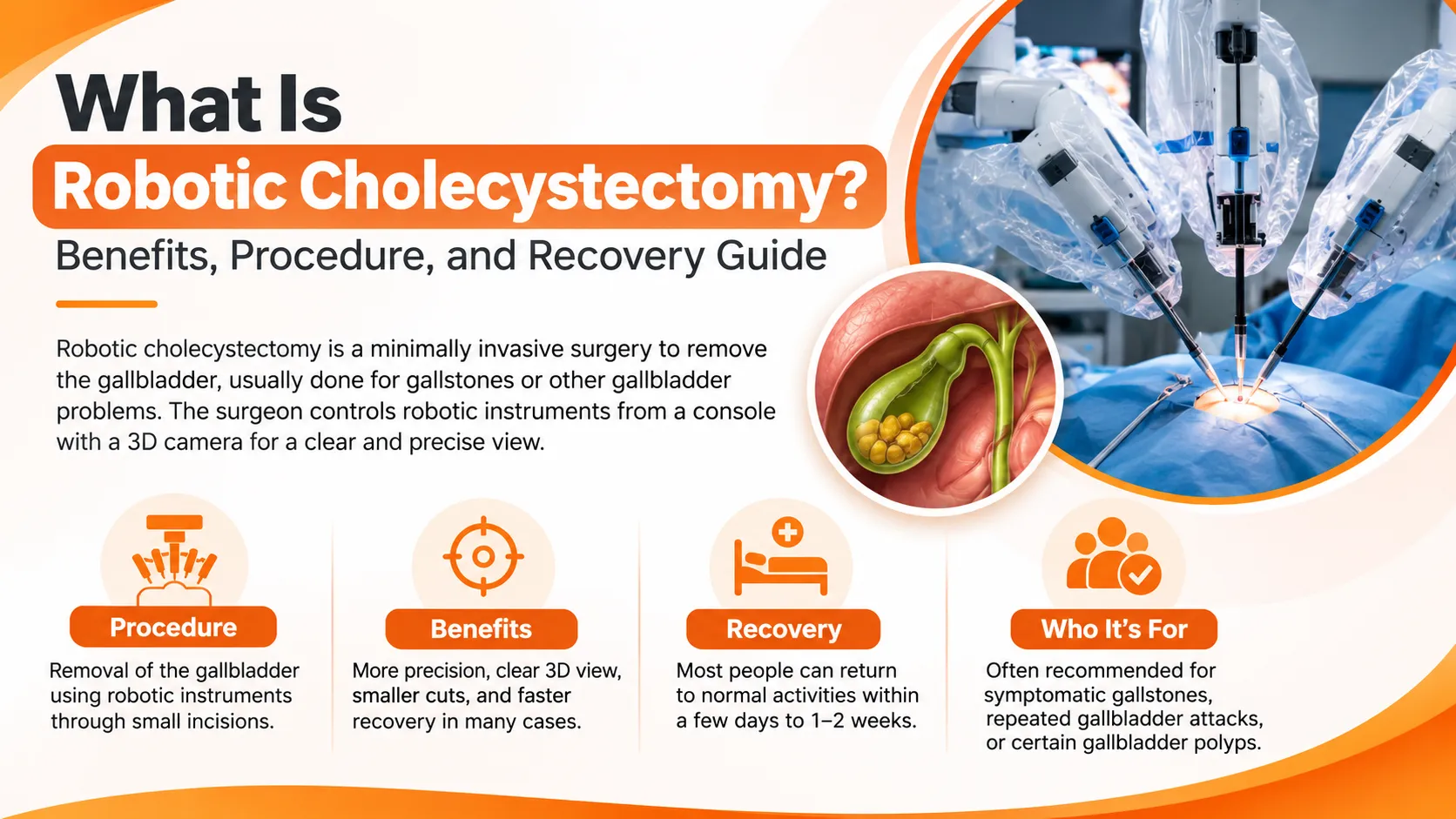
Cholecystectomy means the removal of the gallbladder. In the procedure of robotic cholecystectomy, the doctor makes use of robotic surgical systems to control the small surgical tools inside the abdomen.
The robotic machine does not operate independently. All its activities are controlled by the surgeon who sits at the console. A camera provides a three-dimensional view while the robotic tools provide different directional movements.
The gallbladder is a small organ that is present below the liver. This organ contains the digestive juice that is secreted by the liver. The formation of gallstones may result in inflammation and pain, and hence the removal of the gallbladder may be necessary.
When the gallbladder is removed, the digestive juice comes out of the liver directly to the small intestine. The person can digest food even without the gallbladder.
When Is Robotic Gallbladder Removal Recommended?
A surgeon may discuss gallbladder removal when a patient has a condition that is unlikely to settle with medicines alone. The decision is based on symptoms, scan findings, and the risk of further complications.
Common reasons include:
- Symptomatic gallstones: Stones that cause repeated pain, particularly in the upper right or central abdomen.
- Acute cholecystitis: Sudden inflammation of the gallbladder, often linked to a stone blocking its outlet.
- Repeated gallbladder attacks: Episodes of pain after meals or at other times that keep returning.
- Gallbladder polyps: Certain polyps may need removal because of their size, growth, or other risk features.
- Gallstone-related complications: Some patients develop pancreatitis or other problems linked to gallstones and may need gallbladder removal after appropriate treatment.
A stone in the common bile duct may require separate treatment, such as ERCP, before or around the time of gallbladder surgery. Robotic gallbladder removal does not automatically clear stones from the bile duct.
How Is Robotic Cholecystectomy Performed?
The operation is carried out under general anaesthesia, so the patient remains asleep throughout. The surgical team monitors vital signs while the surgeon controls the robotic instruments.
The main steps are:
1. Small Incisions Are Made
The surgeon makes a few small cuts in the abdomen. These openings allow the camera and robotic instruments to reach the gallbladder.
2. The Robotic System Is Positioned
The robotic arms are connected to the instruments inserted through the incisions. The surgeon sits at a console and controls their movement. A camera provides a magnified view of the organs and surrounding tissues.
3. The Gallbladder Is Separated
The surgeon carefully identifies the cystic duct and cystic artery, which connect the gallbladder to the bile duct and its blood supply. These structures are clipped and divided after their anatomy has been checked.
This part needs particular care. An injury to the main bile duct can cause serious complications, so the surgeon must clearly identify the structures before dividing them.
4. The Gallbladder Is Removed
The gallbladder is separated from the liver and placed in a retrieval bag. It is taken out through one of the small abdominal incisions.
5. The Incisions Are Closed
The surgeon checks the operating area for bleeding or bile leakage. The instruments are removed, and the cuts are closed with stitches or surgical glue.
The operation commonly takes around one hour, although difficult cases may need more time. The duration varies with the patient's condition and the findings during surgery.
Benefits of Robotic Cholecystectomy
The robotic technique provides the surgeon with additional control over the surgical instruments. Among other benefits of the technique, it includes:
- Enlarged 3D image of the area: The robot's camera allows the surgeon to see the gallbladder and the surrounding organs clearly.
- Wrist-like movements of instruments: The wrist-like movements of the robot can make some maneuvers possible that would be impossible with straight laparoscopic instruments.
- Controlled dissection: Small movements allow the surgeon to perform delicate dissection.
- Smaller incision sites: The surgery is done through small cuts rather than a large incision site on the abdomen.
- Alternative in some hard-to-do operations: In some cases where inflammation, adhesions, or abnormal anatomy make the procedure difficult, the use of robotic instruments may be beneficial.
One thing to know is that there is no evidence that robotic surgery performs better in every gallbladder surgery case.
On the whole, studies have shown no difference in terms of hospital stay or complications when compared to laparoscopic surgery.
Robotic vs Laparoscopic Cholecystectomy
Recovery After Robotic Gallbladder Surgery
Patients normally begin to move around a few hours after the surgery when they are awake and stable. While some patients go home the same day after the procedure, there are those who stay for an observation period.
The initial days after surgery might be accompanied by slight abdominal pain, feeling tired, or feeling bloated. Shoulder pain might arise due to gas used to provide a workspace in the abdominal cavity.
First 24–48 Hours
Rest at home and take medicines as prescribed. Short, gentle walks are helpful after clearance is received from the surgical team to move around. Do not drive or drink alcohol, nor engage in tasks requiring full alertness while under the influence of the drugs.
First Week
These minor injuries can hurt at times. You should clean them according to the guidelines provided by the hospital on how to bathe and change dressings. Gentle day-to-day activity can start again, but you shouldn’t lift heavy things or do strenuous exercise until your surgeon says you’re clear to do so.
Returning to Work and Regular Activities
Most people go back to desk work in one to two weeks following keyhole surgery for their gallbladder. Physical labor or heavy lifting jobs may require more recovery time away from work.
The patient should not drive until he or she is able to turn easily, buckle up in a seat belt, and brake safely without discomfort or hesitation.
Eating After Gallbladder Removal
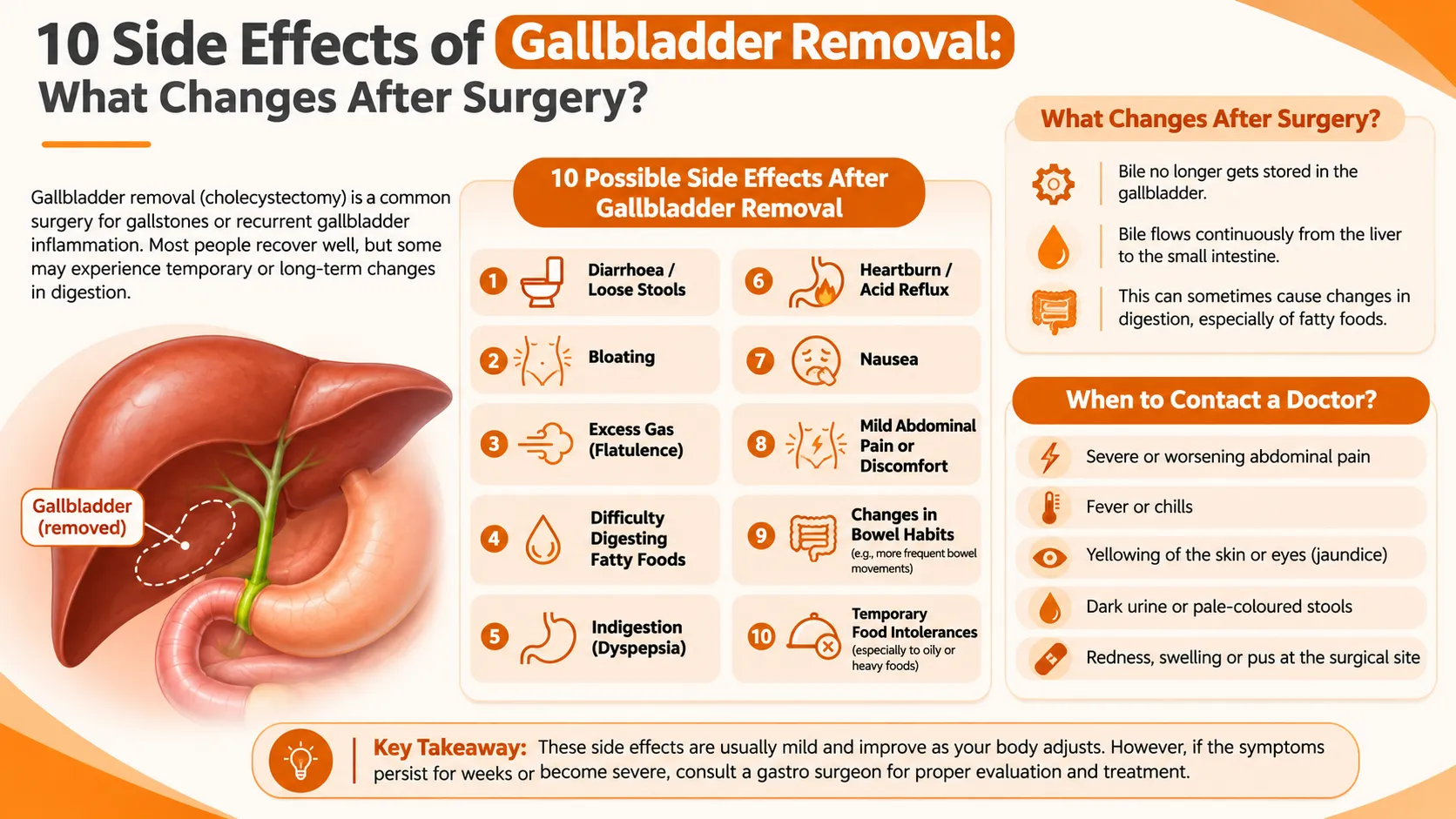
The production of bile does not stop even after the removal of the gallbladder, but instead, the bile flows straight into the intestines rather than being stored in the gallbladder.
Patients can resume a normal and healthy diet. The first few days might require that smaller portions be eaten. Patients may experience some looseness in the stool, bloating, or gas especially when consuming high fat content foods. These conditions may clear up after some time.
Not all patients have to consume a completely fat-free diet forever. This is dependent on the patient's tolerance.
Possible Risks and Complications
Cholecystectomy surgery using robotic assistance is quite frequently carried out. Nevertheless, there is no such thing as an absolutely safe surgical procedure. Risks involved with such a surgery include:
- Bleeding: Bleeding could result from detachment of the gallbladder.
- Infection: There is a possibility of infection in the wound and in the surgical area inside the body.
- Leakage of bile: Leakage of bile can be caused by the stump of the cystic duct and a small bile duct.
- Injury to the bile duct: Such injury is quite rare, yet in this case additional treatment may be required.
- Clotting: Reduced activity at the time of surgery increases the possibility of blood clots.
- Anaesthesia-related problems: Some patients may experience reactions or other complications related to general anaesthesia
In some cases, the doctor may think that carrying out the surgery through the keyhole would not be safe for the patient, and a change to the open technique will be required.
When Should a Patient Contact the Doctor After Surgery?
Soreness and fatigue are normal in the initial stages of the healing process. Some symptoms may need immediate medical care.
These include:
- Fever or chills.
- Worsening pain in the abdomen rather than improvement.
- Yellowing of eyes or skin.
- Vomiting that is not subsiding.
- Increased redness, swelling, drainage, or pain from the incision area.
- Dark urine or very pale stools.
- Severe swelling of the abdomen.
Severe abdominal pain, fainting, chest pain, or difficulty breathing should be addressed immediately.
Who Is a Suitable Candidate for Robotic Gallbladder Surgery?
Patients with symptomatic gallstones or any other ailment that calls for the removal of the gallbladder may be screened for robotic surgery. In such cases, the doctor evaluates the ultrasound findings, blood reports, history of the patient, and whether there were any past abdominal surgeries.
In cases where a patient has inflammation or stones in the bile duct, among other ailments, he or she may require more investigations and therapy before undergoing gallbladder surgery. There may be some health complications that may influence the timing of the procedure.
It does not automatically follow that robotic surgery is necessary if there are gallstones. It is possible to have them but still not experience any symptoms. Thus, a consultation will determine whether you need surgery and what kind it should be.
Conclusion
Robotic cholecystectomy is a minimally invasive option for removing the gallbladder in patients with symptomatic gallstones or other gallbladder conditions. However, robotic surgery may not be necessary for everyone, and the right approach depends on the patient's condition.
Dr. Ajay Yadav, a Gastro Surgeon in Lucknow with over 22 years of experience, performs laparoscopic and robotic GI surgeries. Consulting him can help patients understand their treatment options, the suitable surgical approach, and the expected recovery process.
Frequently Asked Questions
1. Is Robotic Cholecystectomy a Major Surgery?
It is a minimally invasive procedure that takes place under general anesthesia. Gallbladder removal is done by making small incisions in the abdomen. However, the procedure demands care since the bile duct and the blood vessels need protection.
2. What is the Operating Time for Robotic Gallbladder Surgery?
The process may last up to an hour, depending on the case, since severe inflammation, scar tissue, and complex anatomy might take more time during the operation.
3. What is the Length of Robotic Gallbladder Surgery Recovery?
Recovery after a simple procedure takes several days before a person gets back to normal activities and about a week or two before being able to perform office work.
4. Is it possible to lead an ordinary life without a gallbladder?
Yes. Bile keeps being produced by the liver and goes directly into the small intestine. In most cases, patients go back to the same eating regimen, but some undergo certain changes in their digestion process.
5. Is a robotic cholecystectomy more secure than a laparoscopic one?
Nowadays, there is no proof that robotic surgery is more secure for all patients. Both types of procedures can be used to remove the gallbladder, and in such cases, the competence of the surgeon, the general health condition of the patient, and correct identification of the bile ducts matter a lot.
6. Is it possible to have gallstones after the gallbladder has been removed?
Gallstones cannot appear inside a removed gallbladder. But sometimes, stones might remain in or develop in the bile ducts. Therefore, unusual symptoms after the procedure must be examined.
Related Blogs
- Robotic Inguinal Hernia Surgery: Procedure, Recovery, Cost & Side Effects
- Robotic Hernia Surgery: How It’s Done, Recovery & Side Effects
- Robotic Surgical Procedures for Ventral Hernia Repair
- Robotic Hernia Surgery Cost in India
- Robotic vs Laparoscopic Hernia Surgery: Which Is Better?
- What Is the Difference Between Sleeve Gastrectomy and Gastric Bypass?
Related Services
- Best Robotic Hernia Surgeon in Lucknow
- Best Robotic Bariatric Surgeon in Lucknow
- Best Robotic Gallbladder Surgeon in Lucknow
- Robotic Gastro Surgeon