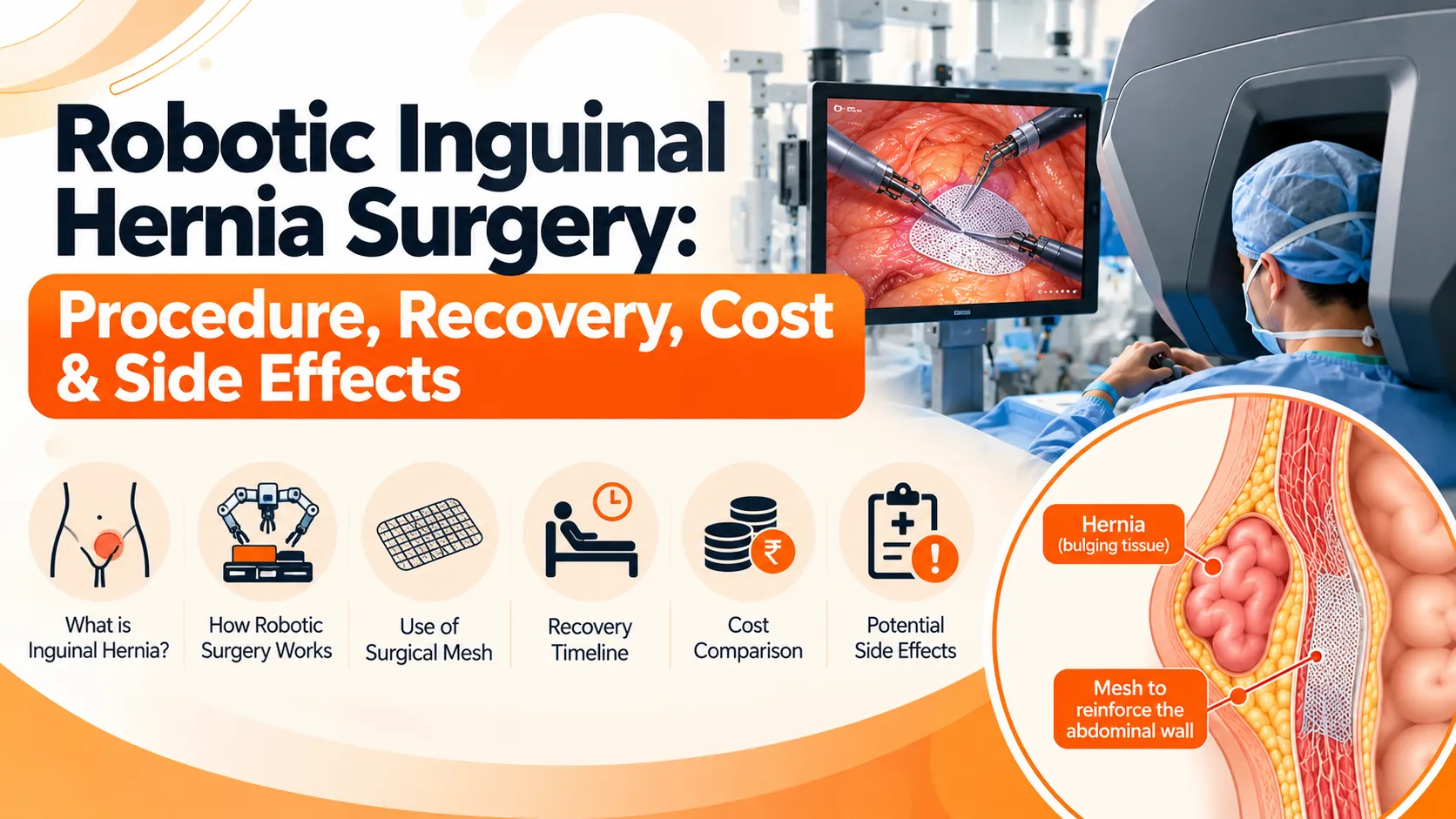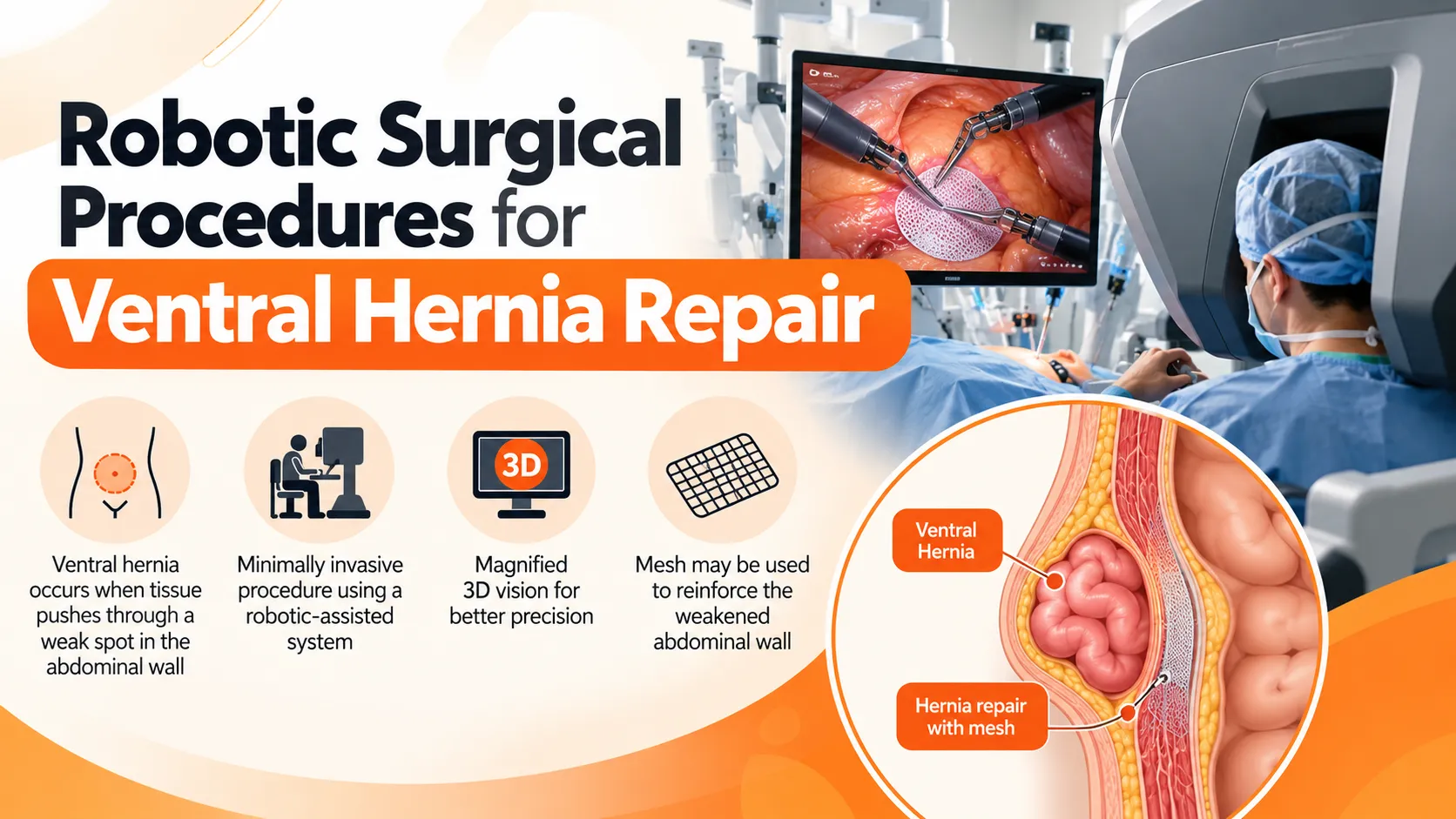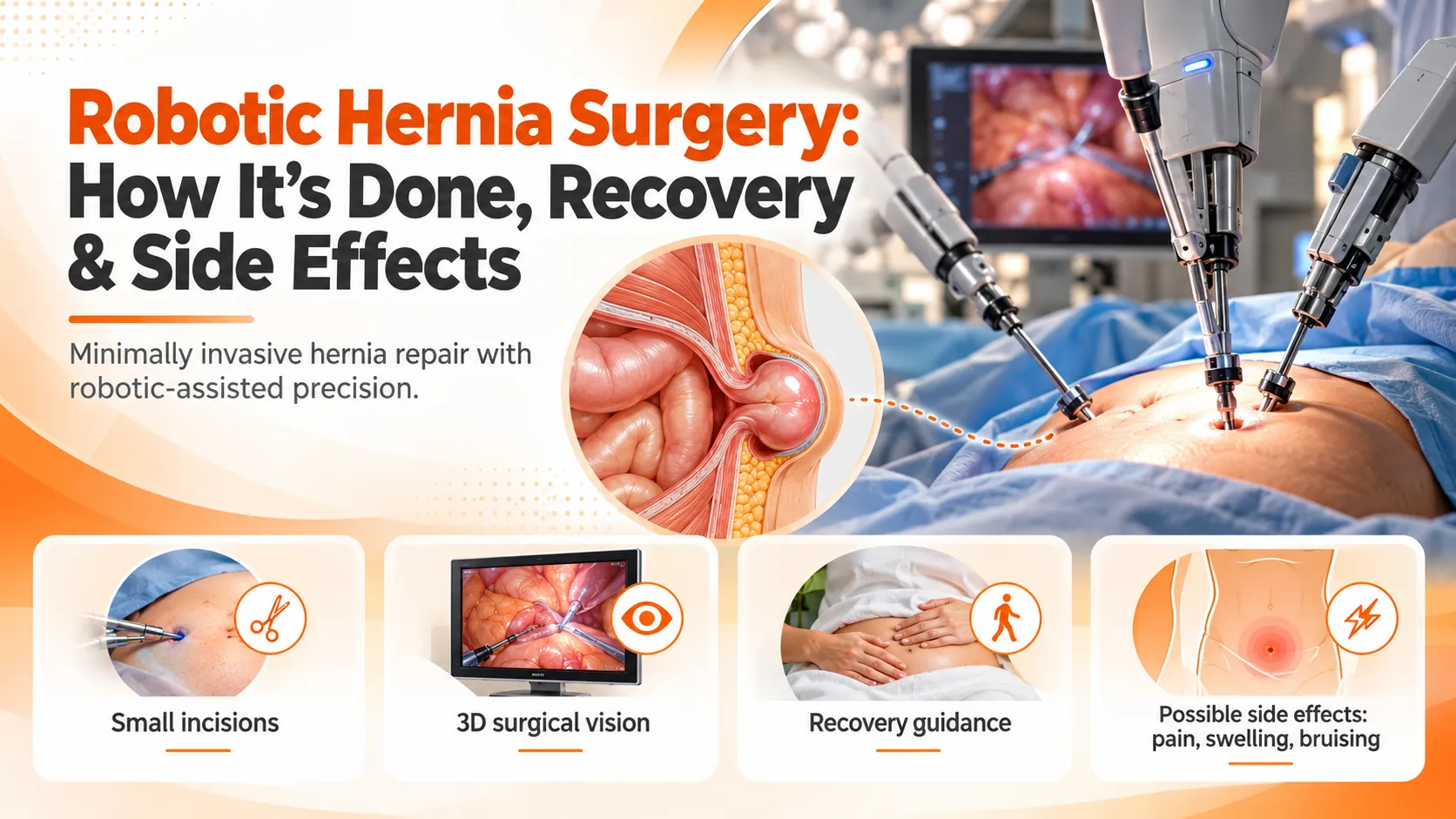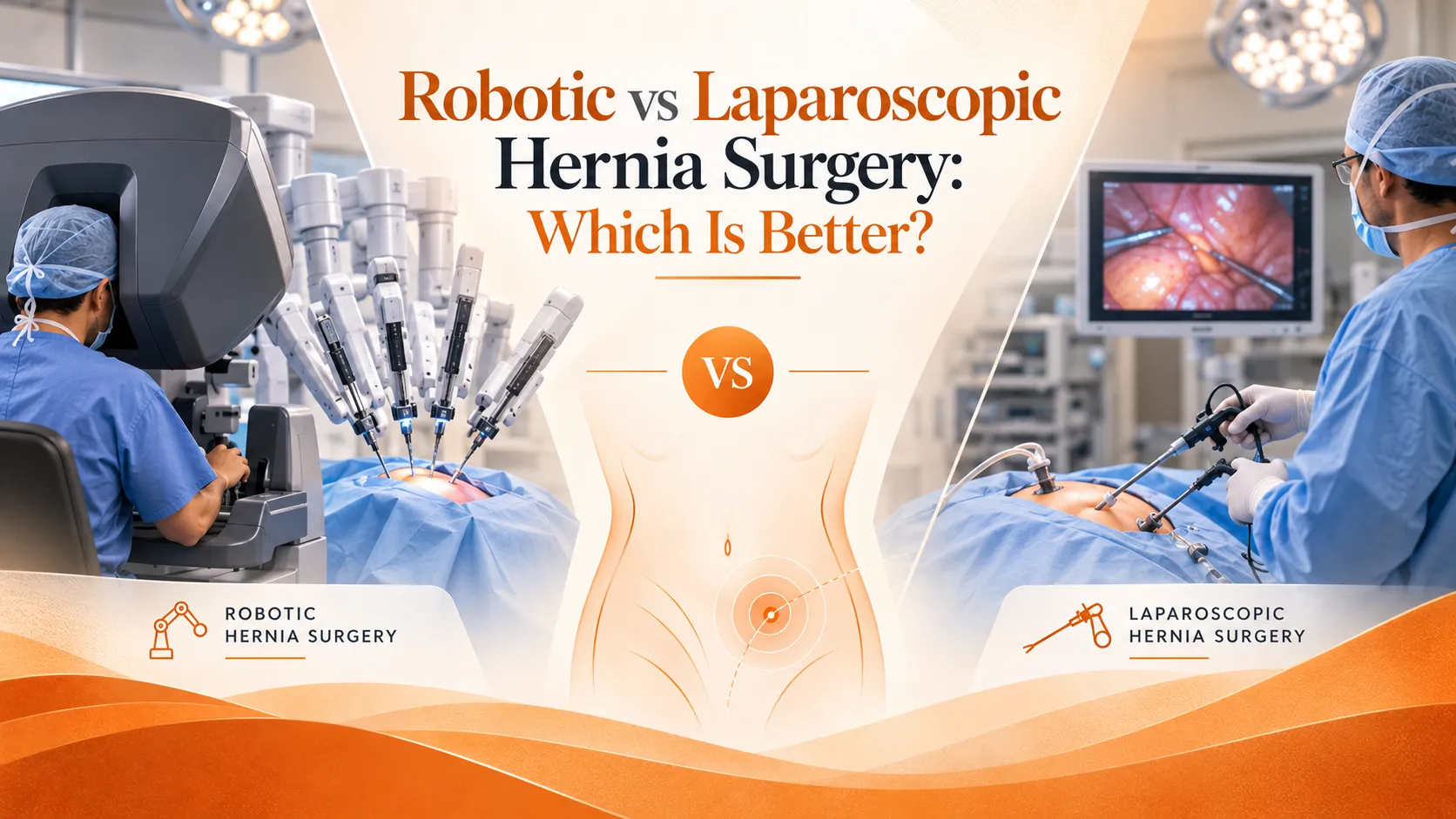
Both robotic and laparoscopic hernia surgeries are minimally invasive procedures performed through small incisions, but robotic hernia surgery uses a surgeon-controlled robotic console that provides enhanced 3D visualization and greater instrument flexibility. It may also involve a higher cost and, in some cases, a longer operating time compared with laparoscopic surgery.
So, Robotic vs Laparoscopic Hernia Surgery: Which Is Better? The answer depends on the type and complexity of the hernia, previous surgeries, overall health, and the surgeon’s assessment. Laparoscopic surgery is effective for many hernias, while robotic surgery may offer technical advantages in selected complex or recurrent cases.
What Is Robotic Hernia Surgery?
Robotic hernia surgery is also a minimally invasive procedure, but the surgeon operates specialized robotic instruments from a surgical console.
The robotic system does not perform the surgery automatically. Every movement is controlled directly by the surgeon.
The system generally provides:
- Magnified 3D visualization
- Wristed surgical instruments
- A wider range of instrument movement
- Precise suturing capability
- Controlled tissue dissection
These features may be helpful when repairing selected hernias that require detailed dissection, reconstruction, or suturing in difficult anatomical areas.
What Is Laparoscopic Hernia Surgery?
Laparoscopic hernia surgery is a minimally invasive procedure performed through several small incisions in the abdomen.
A thin camera called a laparoscope is inserted through one incision, allowing the surgeon to view the surgical area on a monitor. Long surgical instruments are introduced through the other incisions to repair the hernia.
During the procedure, the surgeon may:
- Move protruding tissue back into its normal position
- Identify the hernia defect
- Place surgical mesh when clinically appropriate
- Secure or close the defect
- Reinforce the weakened abdominal wall
Laparoscopic surgery has been used for many years and remains an established treatment option for selected inguinal, ventral, bilateral, and recurrent hernias.
Differences between Robotic vs Laparoscopic Hernia Surgery
Which Is Better: Robotic or Laparoscopic Hernia Surgery?
Neither approach is automatically better for every patient.
For many straightforward hernias, laparoscopic repair may provide effective minimally invasive treatment without the additional expense associated with robotic technology.
Robotic surgery may be considered when the surgeon believes greater instrument flexibility, 3D visualization, or precise suturing could be useful.
The choice should be based on factors such as:
- Type of hernia
- Size of the hernia defect
- Location of the hernia
- Primary or recurrent hernia
- Previous abdominal surgeries
- Amount of scar tissue
- Complexity of abdominal wall reconstruction
- Patient's overall health
- Surgeon’s experience with each technique
A patient should therefore not select robotic or laparoscopic surgery based only on which technology appears newer.
Benefits of Robotic Hernia Surgery
Robotic-assisted surgery provides several technical features that may be useful during selected hernia repairs.
Magnified 3D Visualization
The robotic system provides a detailed three-dimensional view of the surgical field, which may help the surgeon identify tissues and anatomical structures during the procedure.
Greater Instrument Flexibility
Robotic instruments can bend and rotate at their tips, allowing movements similar to the human wrist.
This may be useful when operating in narrow or difficult areas.
Precise Suturing
The range of movement provided by robotic instruments can assist with suturing and abdominal wall reconstruction in selected procedures.
Controlled Tissue Dissection
Fine instrument movements may help with careful separation of tissues, particularly when previous surgery or scar tissue is present.
Useful in Selected Complex Repairs
Robotic assistance may be considered for some:
- Ventral hernias
- Incisional hernias
- Recurrent hernias
- Bilateral hernias
- Complex abdominal wall defects
However, these potential advantages do not mean robotic surgery provides better results for every patient.
Benefits of Laparoscopic Hernia Surgery
Laparoscopic repair also provides several advantages and remains an important minimally invasive technique.
Established Surgical Technique
Laparoscopic hernia repair has been performed for many years and is widely used for different types of hernias.
Small Incisions
Like robotic surgery, laparoscopic repair is generally performed through small abdominal incisions.
Suitable for Many Hernias
It may be used for selected:
- Inguinal hernias
- Bilateral inguinal hernias
- Ventral hernias
- Umbilical hernias
- Recurrent hernias
Generally Lower Cost
Because laparoscopic surgery does not require a robotic platform and specialized robotic instruments, treatment costs are generally lower.
Widely Available
Laparoscopic equipment is available in considerably more hospitals than robotic surgical systems.
Robotic vs Laparoscopic Hernia Surgery for Complex Hernias
Complex hernias may require more extensive repair than a straightforward primary hernia.
Examples can include:
- Large incisional hernias
- Recurrent hernias
- Multiple abdominal wall defects
- Hernias following previous abdominal operations
- Cases requiring detailed abdominal wall reconstruction
In selected complex cases, robotic instruments may help the surgeon perform dissection and suturing in difficult areas.
However, complexity alone does not mean robotic surgery is always required. Experienced surgeons can perform many advanced hernia repairs using laparoscopic or open techniques as well.
Which Surgery Causes Less Pain?
Both laparoscopic and robotic hernia surgery use small incisions and are considered minimally invasive approaches.
The amount of post-operative pain can vary depending on:
- Type of hernia
- Size of the defect
- Extent of repair
- Mesh fixation
- Number and location of incisions
- Previous operations
- Individual pain sensitivity
It would therefore be misleading to say that one approach is always less painful than the other.
Which Has a Faster Recovery?
Recovery after both procedures depends more on the type and complexity of the hernia repair than simply on whether a robot or conventional laparoscopic instruments were used.
Some patients undergoing a straightforward minimally invasive repair may return to routine activities relatively quickly, while patients undergoing complex reconstruction may require a longer recovery period.
Patients should follow individualized instructions regarding:
- Walking
- Wound care
- Driving
- Returning to work
- Exercise
- Heavy lifting
Robotic vs Laparoscopic Hernia Surgery Cost
Cost is one of the major differences between the two approaches.
Robotic hernia surgery is generally more expensive because it requires:
- Robotic surgical technology
- Specialized robotic instruments
- Additional equipment
- Robotic consumables
- Specific operating-room resources
Laparoscopic surgery generally has a lower overall treatment cost.
However, the decision should not be made based solely on price. Patients should first understand whether one technique provides a meaningful advantage for their particular hernia.
Are Robotic and Laparoscopic Hernia Surgery Safe?
Both techniques are established minimally invasive surgical approaches when used appropriately.
As with any operation, possible complications may include:
- Bleeding
- Infection
- Seroma or fluid collection
- Anaesthesia-related complications
- Injury to surrounding structures
- Persistent discomfort
- Mesh-related complications
- Hernia recurrence
- Blood clots
Individual risk depends on the patient's medical health, hernia characteristics, previous surgery, and complexity of the repair.
How Does a Surgeon Choose Between Robotic and Laparoscopic Surgery?
The surgeon may review:
- Type and location of the hernia
- Size of the defect
- Symptoms
- Previous hernia repairs
- Previous abdominal surgery
- Imaging findings
- Scar tissue
- Overall health
- Fitness for anaesthesia
- Complexity of the planned repair
The surgeon can then explain whether robotic, laparoscopic, or open hernia repair may be most suitable.
Consult Dr. Ajay Yadav for Hernia Surgery
Patients considering minimally invasive hernia repair can consult Dr. Ajay Yadav, Gastro Surgeon in Lucknow, for evaluation and individualized surgical planning.
Dr. Ajay Yadav has completed MBBS, MS in Surgery, and MCh in Gastro Surgery and has more than 22 years of surgical experience.
Depending on the type, size, location, previous treatment, and complexity of the hernia, the available surgical approach may include robotic-assisted, laparoscopic, or open hernia repair.
A detailed evaluation can help determine which approach is appropriate rather than selecting a surgical technique based only on technology or cost.
Conclusion
Both robotic and laparoscopic hernia surgery are effective minimally invasive options, but the right choice depends on the individual patient and the complexity of the hernia.
Laparoscopic surgery is a well-established approach and may be suitable for many routine hernia repairs. Robotic surgery offers additional features such as 3D visualization, flexible instruments, and improved suturing capability, which may be useful in selected recurrent or complex cases.
The final decision should be based on the type of hernia, previous surgeries, anatomy, overall health, and surgical requirements, rather than choosing a technique only because it is newer or more advanced.
If you are considering hernia surgery, consult Dr. Ajay Yadav, Best Gastro Surgeon in Lucknow, for proper evaluation and guidance on whether robotic-assisted, laparoscopic, or another surgical approach may be suitable for your condition.
FAQS
1. Is robotic hernia surgery better than laparoscopic surgery?
Not for every patient. Robotic surgery offers additional instrument flexibility and 3D visualization, while laparoscopic surgery remains effective for many hernia repairs. The appropriate technique depends on the individual case.
2. Which surgery is more expensive: robotic or laparoscopic hernia repair?
Robotic hernia surgery is generally more expensive because it involves specialized robotic equipment, instruments, and consumables.
3. Which has a faster recovery: robotic or laparoscopic hernia surgery?
Recovery can be similar for many minimally invasive procedures. The recovery period depends mainly on the type and complexity of the hernia repair and the patient's overall health.
4. Which is better for recurrent hernia?
Both techniques may be considered for selected recurrent hernias. Previous surgery, scar tissue, hernia location, and complexity must be evaluated before choosing an approach.
5. Is mesh used in robotic and laparoscopic hernia surgery?
Yes, mesh may be used with either technique when clinically appropriate. The mesh type, size, and placement depend on the individual hernia and surgical plan.
6. How do I know which hernia surgery is right for me?
A surgical consultation is required. The surgeon reviews the hernia type, size, symptoms, previous operations, imaging findings, and overall health before recommending robotic, laparoscopic, or open repair.