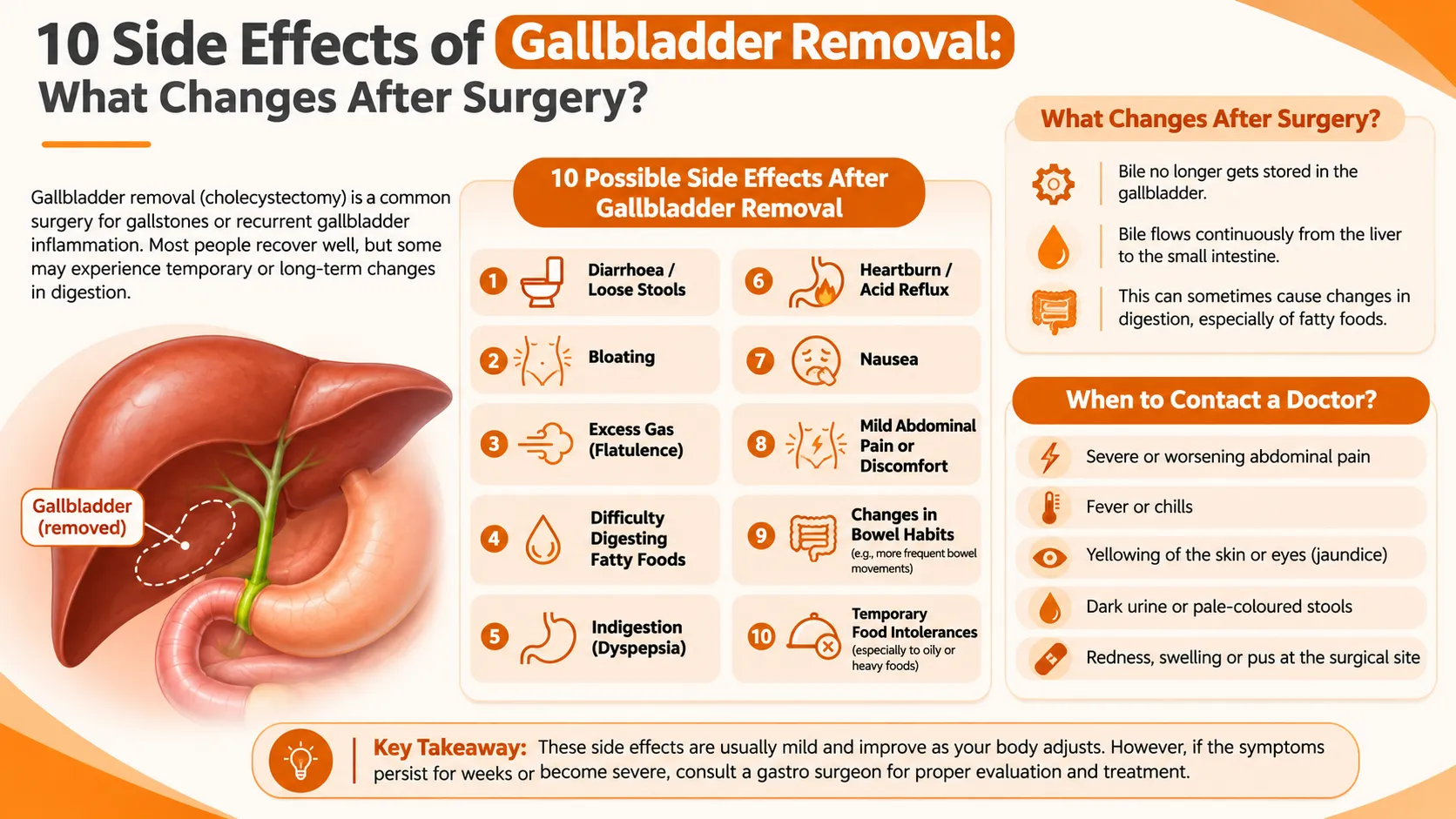
Gallbladder removal, medically known as cholecystectomy, is a common surgical procedure recommended for people with painful gallstones or recurring gallbladder inflammation. Most patients recover well and can lead a normal life without a gallbladder. However, some may notice changes in digestion after surgery, including bloating, diarrhoea, gas, or difficulty digesting fatty foods. While these symptoms often improve with time, they may persist for several months in some individuals.
Why Can Problems Occur After Gallbladder Removal?
The gallbladder stores bile secreted by the liver and releases it into the small intestine whenever food, mainly fats, is ingested into the digestive system.
After its removal, bile is produced by the liver, but there is no storage sac to keep it until food is consumed. Bile is released into the small intestine continuously.
Most patients adapt to this situation without much effort. For some, this may affect their digestion whenever they consume a lot of food or very fatty foods. Other complaints may be attributed to recovery, postoperative drugs, or other gastrointestinal diseases.
However, not all the issues that develop after surgery result from the lack of the gallbladder. Painful sensations require further investigation and should not be automatically attributed to the surgery.
10 Side Effects of Gallbladder Removal
1. Diarrhoea and Frequent Bowel Movements
Loose stools have been known to be one of the most frequent changes following gallbladder surgery. Since there is no container for the bile anymore, it will enter the intestines throughout the day. There are individuals whose excess production of bile affects their large intestines, causing them to have loose stools or having the urge to go to the toilet immediately.
The condition tends to worsen when there are several fatty foods consumed. Persistent diarrhoea should be discussed with a doctor because bile acid diarrhoea can sometimes be treated with medicines that bind bile acids.
2. Bloating and Gas
Some patients experience an abnormal feeling of fullness or notice swelling in the abdomen when they eat.
This might be due to changes in the patient’s eating behavior, changes in bile secretion, or disturbances in the digestive process. Large portions, greasy foods, carbonated beverages, and foods that produce excess gas could make the condition worse.
Smaller meals and proper mastication might resolve the issue. However, if the bloating persists or is associated with other symptoms such as vomiting, then a medical examination is necessary.
3. Indigestion After Meals
A meal that was digestible before surgery becomes hard to digest after the operation. It can become hard for a patient to describe symptoms such as feeling full in the upper portion of his abdomen, burping, feeling nauseated, or feeling that food is lodged in his stomach.
Fatty meals become quite hard to digest after an operation. The body of a person needs some time to adjust itself with the continuous supply of bile juices into the body.
4. Nausea and Vomiting
Nausea occurs just after surgery due to anaesthesia, painkillers, or altered digestion. The nausea usually stops when the patient is recovering from the surgery.
Any prolonged vomiting, recurrent vomiting despite an initial improvement, or vomiting that prevents the patient from taking in sufficient fluids requires attention. This may be a result of drug side effects, infection, bile duct disorder, or any other problem.
Recurrent vomiting along with intense stomach pain, fever, and yellow discoloration of the eyes requires medical intervention.
5. Abdominal Pain or Discomfort
It is normal to experience some pain around the surgical incisions and abdomen after surgery. The procedure of gallbladder removal involves the use of gas inside the abdomen. This may result in temporary pain in the abdomen or shoulder area.
The pain should reduce gradually. Persistent pain that lasts for weeks, recurs even after recovering from the surgery, or resembles the pain before the gallbladder surgery requires further analysis.
Causes of pain may be retained bile duct stones, leakage of the bile, and inflammatory diseases not related to the gallbladder.
6. Constipation
Not everybody has symptoms of diarrhoea. However, some people may have difficulty passing faeces after gallbladder removal surgery, especially in the initial days.
Sluggishness, dietary changes, dehydration, and opiate analgesics may lead to slower bowel movements. In addition, people might consume less food compared to normal.
Walking as recommended, drinking sufficient water, and consuming dietary fibre will help. In case of severe constipation and increasing abdominal distension along with vomiting and lack of flatulence, inform the attending physician.
7. Difficulty Digesting Fatty Foods
Fatty foods, including deep-fried foods, cream, butter, or fatty gravies, could cause distress following gallbladder removal surgery. Loose bowel movements, flatulence, and abdominal cramps have been reported as common occurrences shortly after eating in some individuals.
The production of bile by the liver continues without any problem; thus, the body would not become incapable of digesting fats because the bile produced will now be secreted continuously into the intestines rather than being stored.
In the first few weeks, it may be better to eat smaller and lower-fat foods. Almost everybody would be able to go back to a normal and balanced diet.
8. Heartburn and Acid Reflux
There have been cases where patients have described a burning feeling in the chest area or upper abdomen following gallbladder surgery. Other complaints include a taste of sour liquid in the mouth or frequent belching.
These symptoms could arise due to acid reflux, alteration in one’s diet, or preexisting stomach problems. They do not necessarily indicate any backward flow of bile into the stomach.
It is advisable to consult a physician in case of persistent heartburn, problems swallowing, or pain that will not go away.
9. Bile Duct Injury or Bile Leakage
This is a rare but significant complication of gallbladder surgery. The bile duct transports bile from the liver towards the intestine. Damage done during surgery can lead to leakage of bile into the abdominal cavity or impede its flow.
Symptoms may include:
- Increasing abdominal pain.
- Fever or chills.
- Nausea and vomiting.
- Swelling or tenderness in the abdomen.
- Yellowing of the skin or eyes.
These symptoms need prompt medical assessment. Treatment may involve drainage, an endoscopic procedure such as ERCP or, in some cases, another operation.
10. Retained or Newly Formed Bile Duct Stones
The gallbladder removal will not necessarily get rid of the stones that have already passed into the common bile duct. A stone may be missed during the surgical process or formed later in the bile ducts.
The patient experiences pain in the upper abdomen, jaundice, fever, dark-colored urine, and pale stools. Obstruction of the bile duct may cause infection and pancreatitis.
Tests such as blood tests and imaging are done by the physician to examine the bile ducts. ERCP is one procedure to remove specific types of stones from the bile ducts.
Can Side Effects Continue for Months After Gallbladder Removal?
Yes. Although most people recover well after gallbladder removal surgery, some may continue experiencing digestive symptoms for several weeks or months. These symptoms may include:
- Recurrent abdominal pain or discomfort.
- Loose stools or frequent bowel movements.
- Bloating and excessive gas.
- Nausea and indigestion.
- Heartburn or acid reflux.
Persistent or new symptoms after gallbladder surgery are sometimes described as Post-Cholecystectomy Syndrome (PCS). It is not a single disease but a term used for symptoms that develop or continue after gallbladder removal.
Possible causes include retained bile duct stones, narrowing of the bile duct, bile acid diarrhoea, acid reflux, or other digestive conditions. In some cases, the symptoms may be related to a condition that existed even before surgery.
The doctor may recommend blood tests, an abdominal ultrasound, or other imaging tests to identify the underlying cause. MRCP or ERCP may be advised when a bile duct problem is suspected.
Persistent symptoms should not be ignored, as many underlying causes can be treated once properly diagnosed.
When Should You Contact a Doctor After Gallbladder Removal?
Mild pain around the surgical area, temporary bloating, or changes in bowel movements may occur during recovery. However, certain symptoms can indicate a complication and require medical attention.
Contact your doctor promptly if you experience:
- Severe or worsening abdominal pain.
- Fever, chills, or unusual weakness.
- Repeated vomiting or difficulty keeping food and fluids down.
- Yellowing of the skin or eyes (jaundice).
- Dark-colored urine or pale-colored stools.
- Redness, swelling, bleeding, or pus around the surgical wound.
- Persistent diarrhoea, especially when accompanied by weight loss or blood in the stool.
Severe abdominal pain along with fever or jaundice requires urgent medical evaluation. Chest pain or difficulty breathing should also be treated as an emergency.
Do not assume that these symptoms are a normal part of living without a gallbladder. Early medical evaluation can help identify and treat complications.
How to Manage Digestive Changes After Gallbladder Removal
After gallbladder removal, the digestive system may take some time to adjust to the continuous flow of bile into the small intestine. Making a few changes to your eating habits can help manage digestive discomfort during recovery.
Here are some practical dietary tips:
- Eat smaller, frequent meals: Instead of eating two or three large meals, try having smaller portions throughout the day. This may help reduce bloating and digestive discomfort.
- Limit fatty and fried foods: Foods containing excessive oil, butter, cream, and fat-rich gravies may trigger diarrhoea or abdominal discomfort in some people, especially during the initial recovery period.
- Increase fibre gradually: Include foods such as oats, fruits, vegetables, and whole grains in your diet. Increase fibre intake slowly because adding too much at once may cause gas and bloating.
- Stay hydrated: Drink enough water throughout the day. If you experience frequent diarrhoea, maintaining adequate fluid intake is particularly important.
- Identify foods that trigger symptoms: Some people may experience discomfort after consuming milk, coffee, spicy foods, or sugary foods. Keeping a food diary can help identify which foods affect your digestion.
- Gradually return to a balanced diet: Not everyone needs a long-term special diet after gallbladder removal. As your recovery progresses, you can gradually reintroduce different foods according to your tolerance and your doctor's advice.
If digestive symptoms continue despite dietary changes, consult your doctor for further evaluation.
Can a Person Live Normally Without a Gallbladder?
Yes. Most people can live a healthy and normal life without a gallbladder. Although the gallbladder stores bile, it is not essential for survival or normal digestion.
The liver continues producing bile even after gallbladder removal. The difference is that bile flows directly from the liver into the small intestine instead of being stored in the gallbladder.
This allows the body to continue digesting fats. Most people can gradually return to their regular eating habits, daily activities, and lifestyle after recovery.
Some individuals may need to eat smaller meals or limit certain foods if they experience diarrhoea, bloating, or indigestion. However, a lifelong special diet is generally not necessary for everyone.
If digestive problems persist, medical evaluation can help identify the cause and determine appropriate treatment.
Conclusion
Gallbladder removal is generally safe, and most people return to a normal life after surgery. However, some may experience diarrhoea, bloating, gas, or indigestion.
A balanced diet and proper medical guidance can help manage these changes. For persistent digestive problems or gallbladder-related concerns, consult Dr. Ajay Yadav, Gastro Surgeon in Lucknow, for expert evaluation and treatment.
Frequently Asked Questions about Gallbladder
1. What is the most common side effect following gallbladder surgery?
Diarrhoea or loose stools are among the common digestive changes after gallbladder removal. Some people may also experience bloating, gas, indigestion, or difficulty digesting fatty foods. These symptoms do not occur in everyone.
2. Does gallbladder surgery lead to chronic digestive issues?
Most people digest food normally after gallbladder removal. However, some may experience persistent diarrhoea, abdominal pain, bloating, or indigestion. These symptoms should be evaluated by a doctor because several treatable conditions can cause them.
3. Is it possible to consume fatty food after gallbladder surgery?
Yes. Most people can gradually reintroduce fatty foods after recovery. However, large amounts of fried or high-fat foods may cause discomfort, diarrhoea, or bloating in some individuals. A lifelong fat-free diet is generally not required.
4. Why do I have diarrhoea months after gallbladder surgery?
Persistent diarrhoea after gallbladder removal may be caused by bile acid diarrhoea. This occurs when excess bile acids reach the large intestine and contribute to watery stools. A doctor can evaluate the cause and may prescribe bile acid-binding medication when appropriate.
5. Will gallstones appear again after gallbladder surgery?
Gallstones cannot form inside the gallbladder once it has been removed. However, stones may remain in or develop within the bile ducts. These can cause abdominal pain, jaundice, or infection and may require medical treatment.
6. Does gallbladder removal affect life expectancy?
Gallbladder removal generally does not reduce life expectancy. Most people live a normal and healthy life without this organ. If long-term digestive symptoms occur, they should be evaluated and treated by a doctor.
7. What is post-cholecystectomy syndrome?
Post-cholecystectomy syndrome refers to digestive symptoms that persist or develop after gallbladder removal. These may include abdominal pain, diarrhoea, bloating, nausea, indigestion, and acid reflux. The underlying cause needs to be identified before treatment.
8. Can gallbladder removal cause acid reflux or heartburn?
Some people experience heartburn, sour burps, or a burning sensation in the chest or upper abdomen after surgery. These symptoms may be related to acid reflux, dietary changes, or existing digestive conditions. Persistent symptoms should be evaluated by a doctor.
9. What are the warning signs of complications after gallbladder removal?
Severe or worsening abdominal pain, fever, chills, repeated vomiting, jaundice, dark urine, pale stools, or pus around the surgical wound may indicate a complication. Seek prompt medical attention if these symptoms occur.
10. Can bile duct stones develop after gallbladder removal?
Yes. Stones may remain in the bile duct after surgery or develop there later. They can cause upper abdominal pain, jaundice, fever, and bile duct obstruction. A doctor may recommend ultrasound, MRCP, or ERCP depending on the situation.
Related blogs
पित्ताशय (पित्त की थैली) हटाने के साइड इफेक्ट: क्या ऑपरेशन के बाद कोई नुकसान होता है?
पित्ताशय की थैली निकालने की सर्जरी के बाद जीवनशैली में बदलाव
Related services