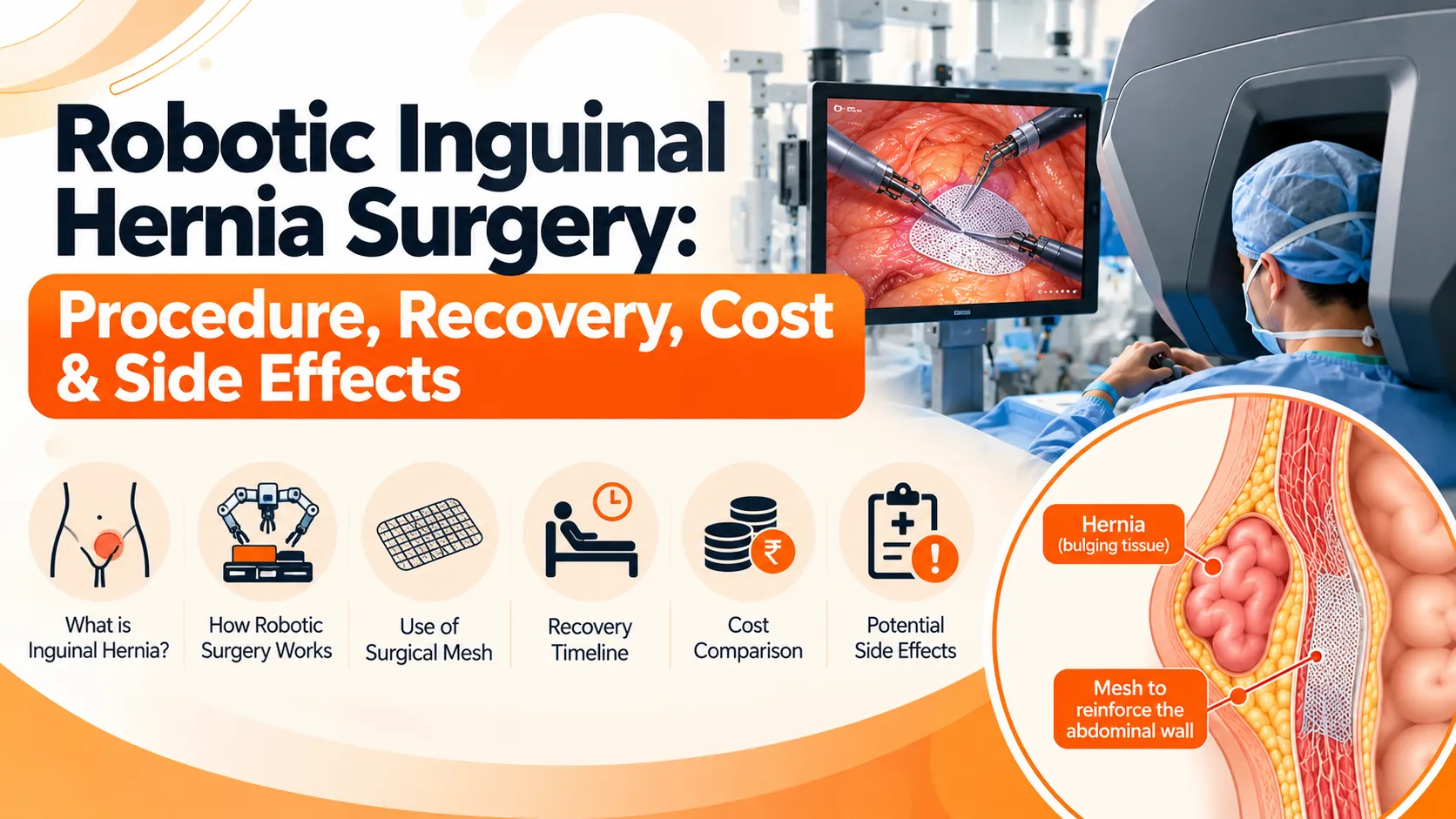
Robotic inguinal hernia surgery is a minimally invasive procedure where a surgeon uses a console-controlled robotic system to push bulging groin tissue back into place and reinforce the abdominal wall with surgical mesh when appropriate. An inguinal hernia occurs when tissue pushes through a weak area in the lower abdominal wall, causing a groin bulge that may become more noticeable when standing, coughing, or lifting. Robotic surgery helps the surgeon repair this weakness through small incisions using magnified 3D visualization and flexible instruments.
What Is Actually Being Repaired?
An inguinal hernia develops when fat or part of the intestine pushes through a weakened area of the lower abdominal wall into the groin, causing a bulge. The bulge may become more noticeable when coughing, exercising, lifting heavy objects, or standing for long periods. It may become less visible when lying down, but the underlying weakness remains.
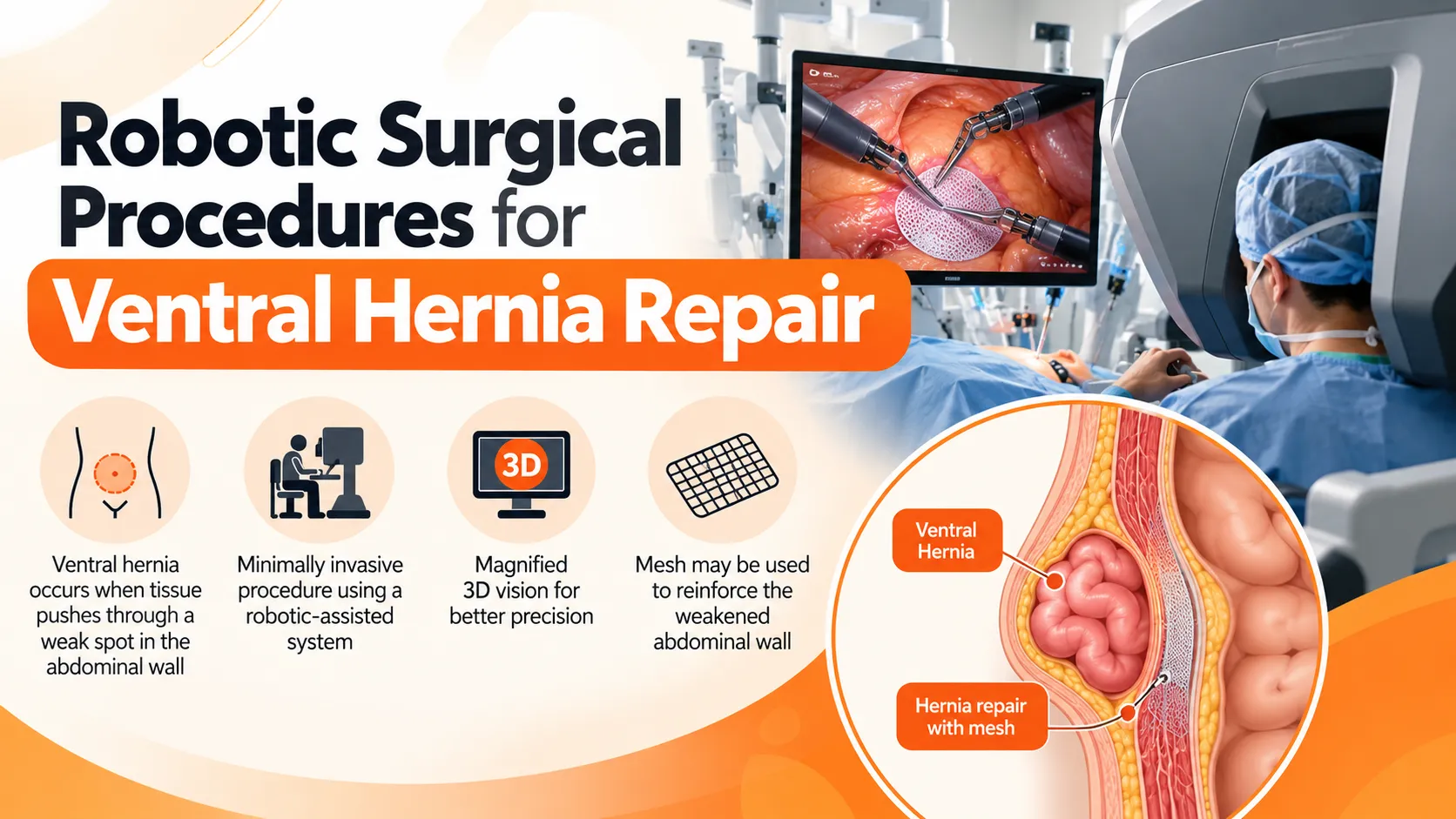
During robotic inguinal hernia repair, the surgeon returns the protruding tissue to its proper position and repairs the weakened area. Surgical mesh is commonly used to reinforce the abdominal wall and help reduce the risk of recurrence. However, no repair can guarantee that a hernia will never return.
What Does the Robot Actually Do?
The robotic system does not make decisions or perform surgery independently. The surgeon controls the instruments from a console, using a camera that provides a magnified 3D view of the surgical area. The instruments have flexible, wrist-like movements that help the surgeon work precisely in confined spaces.
One commonly used technique is robotic TAPP (transabdominal preperitoneal repair). In this approach, the surgeon enters the abdominal cavity, creates a space between the abdominal lining and the abdominal wall, and places the mesh in that space. The main advantages of the robotic system are enhanced visualization, instrument flexibility, and control during tissue dissection and suturing.
Robotic Inguinal Hernia Surgery: What Happens in the Operating Room?
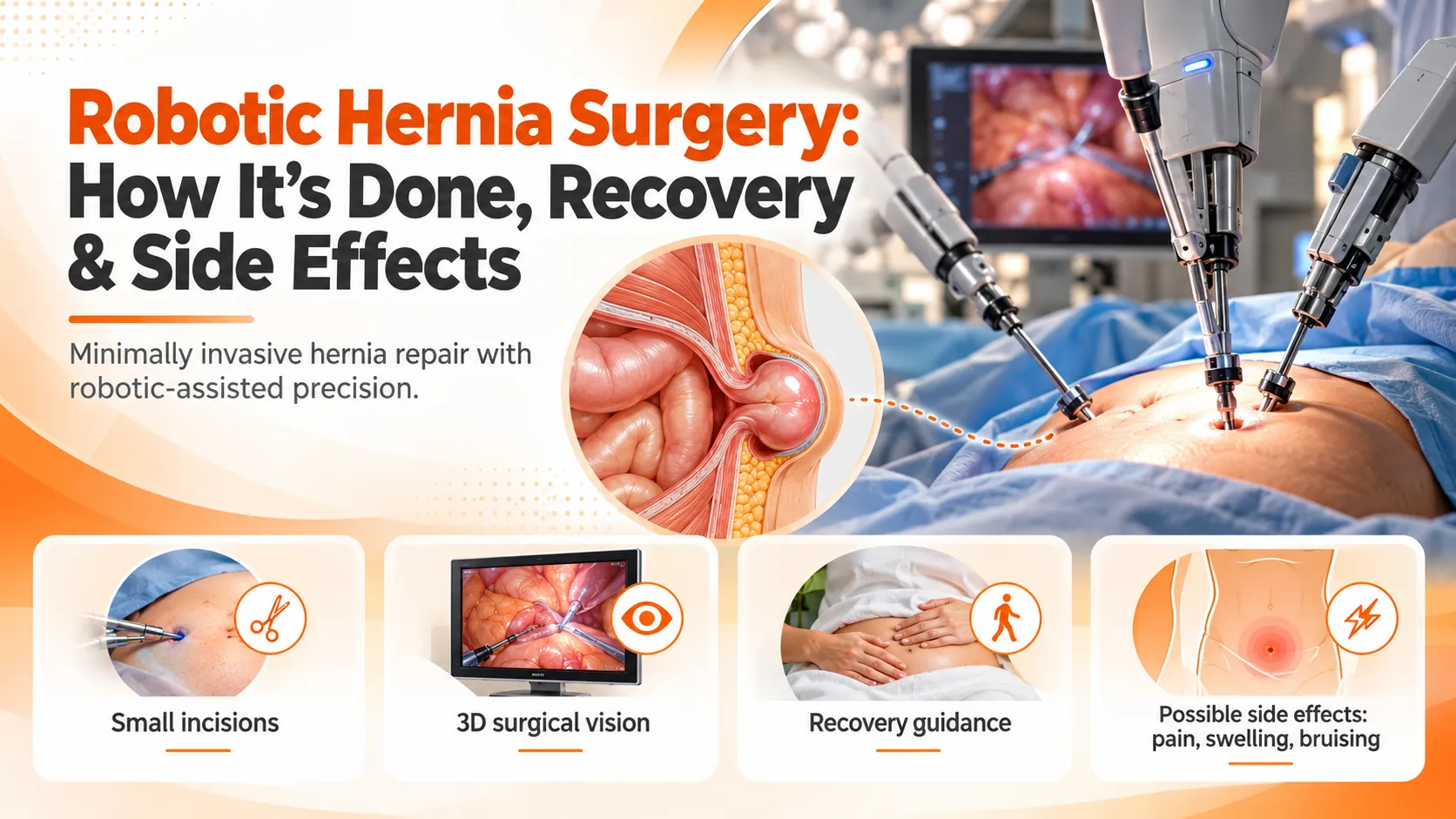
Robotic inguinal hernia surgery is generally performed under general anesthesia. The surgeon makes a few small incisions in the abdomen to insert the camera and robotic instruments.
The surgeon identifies the hernia and carefully separates the hernia sac from the surrounding tissues. Any protruding fat or intestine is then returned to its proper position. The weakened area is prepared for repair, and mesh is placed according to the selected surgical technique to reinforce the abdominal wall.
Once the repair is complete, the instruments are removed and the small incisions are closed. The duration of surgery can vary depending on the complexity of the hernia. Recurrent hernias, hernias affecting both sides of the groin, and cases involving previous surgery may require additional time because of scar tissue or changes in the surrounding anatomy.
Why Is Mesh Used?
The abdominal wall has to withstand pressure every time a person coughs, gets out of bed, lifts something, or strains during a bowel movement.
Simply closing a weak area may not provide enough reinforcement in many inguinal hernias. Mesh adds another layer of strength over the repaired region.
In robotic inguinal hernia repair with mesh, the mesh is placed to cover the area of the weak inguinal floor. During the healing process, the adjacent tissues grow and provide a covering to the mesh.
There are potential complications from mesh repairs, including wound infection, fluid build-up (seroma), pain, and hernia recurrence. All of the above complications occur in less than 10% of patients.
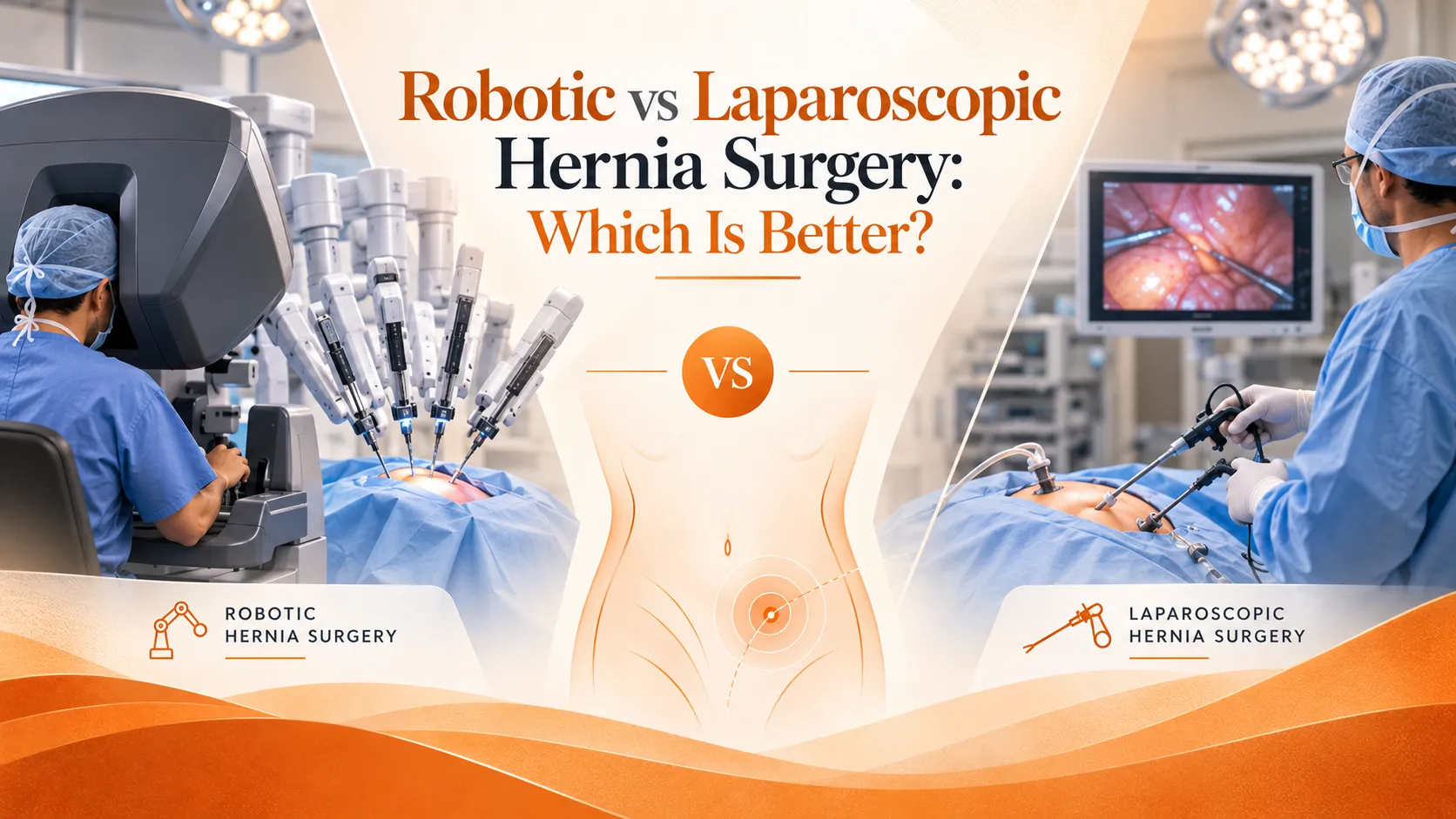
Is Robotic Repair Better Than Laparoscopic Repair?
This is one area where patients should be careful about marketing claims.
Robotic surgery has clear technical advantages. The surgeon gets a magnified 3D view and instruments with greater wrist-like movement. Recent research also shows that robotic surgery can reduce the physical workload on the surgeon. But these advantages have not consistently translated into better patient outcomes.
A 2026 review of randomised trials found no significant difference between robotic and laparoscopic inguinal hernia repair in recurrence, overall complications or same-day discharge. The certainty of the available evidence was rated low to very low. Another recent meta-analysis found broadly similar short-term outcomes but longer operating times and higher direct costs with robotic repair.
That makes the choice more nuanced than simply calling robotic surgery “better.” The type of hernia, previous repairs, surgeon experience, and available technology all have a role.
When Might Robotic Repair Be Useful?
Robotic repair can be considered for:
- Bilateral inguinal hernias
- Selected recurrent hernias
- Patients who need a minimally invasive repair
- Cases where detailed tissue dissection is required
- Repairs where precise suturing may be helpful
A previous operation can change the picture. Scar tissue, an earlier mesh, and altered anatomy may make a recurrent hernia more challenging than a first-time repair.
For a straightforward one-sided hernia, laparoscopic or open surgery may also be entirely appropriate.
The important point is that the robotic system is a method of performing the repair, not a separate type of hernia.
What Will Recovery Actually Feel Like?
The first few hours are mainly about recovering from anaesthesia and getting comfortable.
Once the patient is awake and stable, walking is generally encouraged. The groin may feel sore when getting out of bed or changing position, but gentle movement is usually part of recovery.
During the first several days, bruising, mild swelling, and a pulling sensation around the groin can occur.
Then the recovery becomes more activity-based.
Office work: An individual involved in office work using a computer may recover earlier than another who is engaged in physically demanding jobs that require lifting.
Driving: One should be able to drive without discomfort by operating the vehicle pedals as well as performing an emergency brake without pain. The effect of drugs that cause sleepiness is also something to consider.
Exercises: Walking becomes the priority exercise. Lifting weights, exercising the abdomen, and doing other demanding exercises should be done after the doctor gives clearance.
Routine movements: Actions such as bending, rising from a seated position and climbing the stairs should progressively increase as comfort increases.
The appearance of the skin may be healed before the abdominal muscles fully heal, hence judging recovery of one’s ability to lift based on the wound is not accurate.
Side Effects: What Is Normal and What Is Not?
Some symptoms after surgery are part of ordinary healing.
Usually temporary
- Groin soreness
- Bruising
- Mild swelling
- Tightness while moving
- Temporary numbness around an incision
- Tiredness after anaesthesia
- Seroma, which is a collection of fluid
A seroma can sometimes feel like a small lump near the repaired area. That can worry patients because it resembles the original hernia, but a post-operative fluid collection is not automatically a recurrence.
Needs medical attention
Increasing pain rather than gradually improving pain deserves a call to the surgical team. The same applies to fever, spreading redness, pus from the wound or rapidly increasing swelling.
Difficulty passing urine, repeated vomiting, heavy bleeding or severe abdominal or groin pain should also be assessed promptly.
Persistent groin pain should not simply be accepted as part of recovery. It is worth discussing with the surgeon, particularly when it continues beyond the expected healing period.
What Can Affect Recovery?
Surgery is just a small part of the healing process.
There is a chance that smoking will negatively affect the wound healing process. There is diabetes which can affect your infection risks and tissue recovery if you do not keep it under control. You can have some excess body weight which can be stressing your abdominal wall.
Past history of hernia operations is important too. You can have a recurrent hernia where scar tissues and/or a prior mesh repair are involved.
Proper diet, exercise, and wound care instructions are useful in practice.
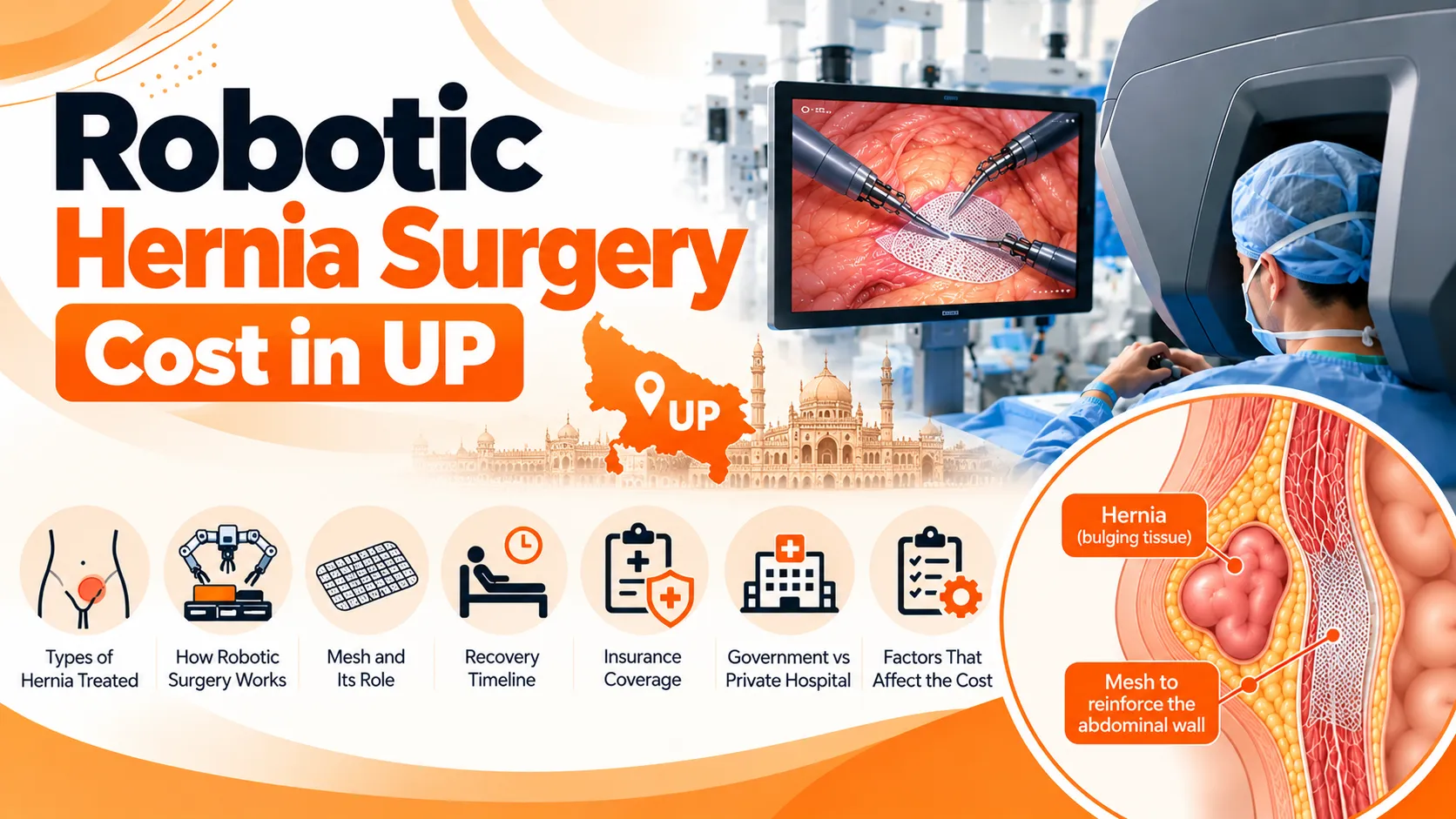
Robotic Hernia Surgery Cost
People searching for robotic hernia surgery cost often want one exact number. That can be misleading because the final amount depends on what actually needs to be done.
The bill may include:
- Surgeon charges
- Hospital and operating-room charges
- Robotic equipment and instruments
- Mesh
- Anaesthesia
- Blood tests and other investigations
- Medicines and consumables
- Hospital stay
- Follow-up care
A first-time one-sided hernia is not the same operation as a recurrent bilateral hernia. The cost may therefore change substantially between patients.
In recent studies comparing both procedures, robotic inguinal hernia repair was found to be more costly than laparoscopic repair despite their similar clinical results.
In order to know the cost of robotic inguinal hernia repair, one needs to first be diagnosed with the condition before having the cost of the operation quoted.
One Symptom That Should Not Wait
A hernia that suddenly becomes very painful, hard, or impossible to push back needs urgent medical attention.
If severe abdominal pain, vomiting, or abdominal swelling occurs along with the painful groin swelling, the situation becomes even more concerning.
This can happen when tissue becomes trapped in the hernia, and its blood supply is affected. It is very different from the mild soreness expected after an uncomplicated planned repair.
Before Choosing Robotic Surgery, Ask These Questions
A patient considering robotic inguinal hernia repair can get a much clearer picture by asking the surgeon:
- Why is robotic repair being recommended for this particular hernia?
- Would laparoscopic or open repair also be reasonable?
- Will mesh be used, and where will it be placed?
- Is the hernia one-sided or bilateral?
- Has previous surgery changed the anatomy?
- When can normal work, driving and exercise resume?
- What is included in the quoted surgical cost?
These questions shift the conversation away from the technology alone, and towards the actual repair the patient needs.
Conclusion
Robotic inguinal hernia surgery uses small incisions, a magnified 3D view, and flexible instruments controlled by the surgeon to repair the weakened groin area. Mesh is commonly used to reinforce the repair. Robotic surgery offers technical advantages, but current evidence has not established it as universally superior to laparoscopic repair, and it generally costs more. The right approach should be chosen around the hernia and the repair required. Dr. Ajay Yadav, Gastro Surgeon in Lucknow with more than 23 years of experience in advanced laparoscopic and robotic surgery.
FAQs
Is it possible to repair both of the inguinal hernias during one robotic surgery?
Yes. It is feasible to repair both hernias at once provided that the patient’s condition and the method of repair allow for that.
Why do I have a bump on my body even after the operation?
Sometimes, healing swelling or seroma may cause a lump to appear near the repaired hernia. Any changes in the appearance of the bump must be reported anyway.
Do all robotic inguinal hernia surgeries involve mesh?
Meshes are often employed in modern hernia surgeries; however, the particular repair method depends on the patient’s anatomy and the findings.
How long after robotic hernia surgery can I go to the gym?
Exercise can be started early, but heavy exercise is recommended after some time. Lifting weights and other exercises that apply strong pressure to the abdomen need to be deferred till the doctor is satisfied with the healing of the hernia site.
Is robotic inguinal hernia surgery more expensive than laparoscopic surgery?
Robotic surgery is generally costlier than laparoscopic surgery in most studies done recently. This depends upon the hospital, surgical procedure, type of mesh, and others.
Can a recurrent inguinal hernia be robotically repaired?
Yes, but this is decided based on anatomical analysis by the surgeon because there might be scar tissue or previous mesh in the site of surgery.
Can an inguinal hernia turn into an emergency?
Yes, inguinal hernia can become an emergency due to symptoms like sudden intense pain, hard or irreducible lump, vomiting, and abdominal distention.
Related Blogs
- Robotic Hernia Surgery: How It’s Done, Recovery & Side Effects
- Robotic Surgical Procedures for Ventral Hernia Repair
- Robotic Hernia Surgery Cost in India
- Robotic vs Laparoscopic Hernia Surgery: Which Is Better?
- What Is the Difference Between Sleeve Gastrectomy and Gastric Bypass?