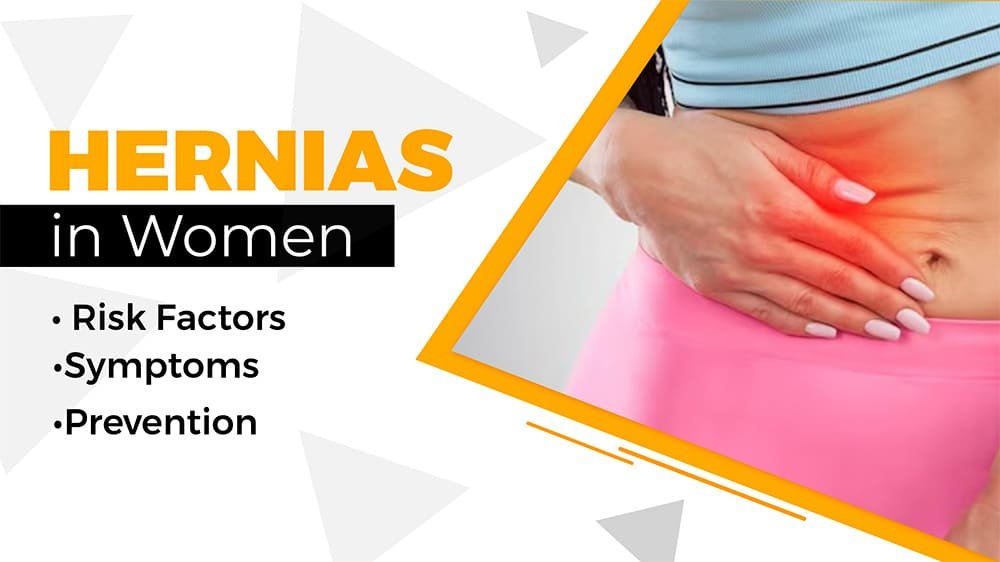
Many people believe that hernias only occur in men, but women can develop hernias as well. In women, the symptoms may sometimes be different and harder to recognise. Identifying the condition early can help prevent serious complications.
The blog will explain the definition of a hernia, which includes its typical symptoms, the factors that cause it, its risk factors, and methods to avoid it.
What Is A Hernia?
A hernia occurs when an internal organ or tissue pushes through a weak spot in the abdominal muscles. This can create a bulge or swelling that may cause discomfort or pain.
A female hernia may occur in the abdomen, groin, or near the belly button. Some cases show a visible lump, while other cases only present pain without any visible swelling.
When people search for information on female hernias they want to know if hernias are a real medical issue and affect women. Female hernias are an actual medical condition that requires treatment.
Types Of Hernia In Women
Women can develop different types of hernias, including:
1. Inguinal Hernia
This condition affects the groin area but occurs more frequently in males than in females.
2. Femoral Hernia
There exists a higher prevalence of this condition among women who are older than other age groups. The condition appears just below the groin area.
3. Umbilical Hernia
This condition develops near the belly button after women experience pregnancy.
4. Incisional Herniaz
The condition may develop after a person undergoes abdominal surgery when their surgical site develops structural weakness.
Hernia Symptoms In Women
Hernia symptoms for women can begin mildly but gradually worsen as time passes.
Females who suffer from abdominal hernias are most likely to experience them are:
- A tiny lump or swelling in the groin or abdomen
- Pain after standing for prolonged periods
- The coughing can cause discomfort when lifting heavy objects
- A burning or aching sensation at the location
- A feeling of weightlessness throughout the abdominal area.
- Pain during physical activity
- Sometimes the female hernia may not display a bulge that is visible. However, some women experience the groin or pelvic area, which makes the diagnosis more difficult.
If you have persistent hernia symptoms, consult an expert.
Risk Factors For Hernias In Women
Certain circumstances increase the chance of developing a hernia
- Pregnancy (due to pressure that is increased pressure in the abdominal muscles)
- Multiple pregnancies
- Obesity
- Chronic cough
- Constipation and straining when bowel movements occur
- Heavy lifting
- An abdominal surgery in the past
- Infirm abdominal muscles
Women who are overweight or who have been pregnant multiple times are at a greater risk of developing an inguinal hernia.
Treatment Options
Hernias can't heal themselves. If you're noticing symptoms of a hernia then getting medical treatment that is appropriate is crucial.
1. Observation
When you find that the woman's hernia is not large and pain-producing, a doctor could recommend regular checks. However, it is still a matter of monitoring.
2. Lifestyle Changes
Healthy, not overlifting, and treating constipation could lower abdominal pressure. But these methods can't solve a woman who has a genuine hernia.
3. Surgery
Only surgery is the most permanent option.
Prevention Of Hernias In Women
Although not all hernias can be prevented, you can lessen the chance of developing them through:
- A healthy weight and body
- Regular exercise is a fantastic method to strengthen abdominal muscles
- Avoid the weight of lifting
- The treatment of chronic cough
- Controlling constipation
- Make sure to take the proper treatment after surgery.
A healthy lifestyle can decrease the chance of developing a hernia.
Choosing The Right Doctor For Hernia Surgery
Choosing the right specialist is important for the proper diagnosis and safe management of hernias. An experienced doctor can carefully evaluate the condition, identify the type and severity of the hernia, and recommend the most suitable surgical approach based on the patient’s health and symptoms.
Dr. Ajay Yadav, who is a specialist in hernia surgery in Lucknow, provides advanced care using modern surgical techniques. With years of experience in treating hernias and other digestive conditions, he focuses on accurate diagnosis, personalised care, and safe surgical outcomes for his patients.
Conclusion
Understanding what a hernia is and recognising the early symptoms can help women seek medical attention at the right time. Hernias in women are not uncommon, but they are often overlooked because the symptoms may be mild or less noticeable in the early stages.
If you experience persistent abdominal discomfort, swelling, or pain in the groin area, it is important to consult a specialist for proper evaluation. Early diagnosis and timely treatment can help prevent complications and ensure a smoother recovery. Consulting an experienced specialist like Dr. Ajay Yadav, recognised as one of the best gastrosurgeons in Lucknow, can help you receive the right guidance and effective treatment for hernia.